Wednesday, December 06, 2006

Baptism in the Ancient Church


By the late second century an elaborate process had developed leading into baptism including:

1. Catechesis. This process included an intense period of instruction in the rudiments of the Christian faith, and often included a time of probation of seven years.

2. Fasting and Prayer. Since baptism often was done on Easter, the forty days prior to this event was dedicated to various spiritual exercises including fasting, prayer, and reading of Scripture.

3. Renunciation. When the time for baptism came, the candidate would be called upon to renounce the devil and all his pomp. Facing westward, direction the sun went down, he would exlaim "I renounce, thee O Satan, and all thy works", and then spit three times in the direction of darkness.

4. Credo. And turning eastward to the sunrise he would say, "And I embrace thee, O Lord Jesus Christ". And this point he would be baptized and recite a baptismal confession of faith often given the form of answers to questions and response with "I believe".

5. Disrobing. The candidate would remove all clothing and enter naked into the waters.

6. Immersion. In some churches the candidate would be immersed three times in the name of the Triune God.

7. New Robe. Coming out of the baptismal waters the candidate would be given a new rob symbolizing their putting on Christ.

8. Annointing. Each candidate would be annointed with oil symbolizing the presence of the Holy Spirit.

9. Laying on of Hands. This represented a sealing of the blessing given to each newly baptized Christian. It connoted a kind of commissioned to stand for Christ and his truth.

10. The Lord's Supper. Only those initiated into the church could partake of the Lord's Supper, and so the candidates would have an early morning supper with fellow Christians.

See Tertullian, De Baptismo; Hippolytus, Apostolic Constitutions; Cyril of Jerusalem, Catechetical Lectures; John Chrysostom, Baptismal Homilies.

Take from Timothy George, Galatians (NAC; Nashville, TN: Broadman & Holman, 1994), pp. 280-81.

Tuesday, December 05, 2006

ACT3

John Armstrong's Ministry ACT3 - Advancing the Christian Tradition in the Third Millennium has a new website and it always has some good articles to read. The aims of ACT3 are:

1. To advance worship in culturally accessible forms, through orthodox theology that is deeply rooted in the classical doctrine of the triune God and through humble collaboration and cooperation within the whole Christian Church.

2. To advance spiritual formation that renews and reforms the church by a growing love for God, neighbor and one another in the one, holy, catholic and apostolic church, so that the world may believe the Father sent the Son to save it.

3. To advance the mission of Christ’s kingdom by teaching believers and churches to engage both people and culture with the story of Jesus Christ.

You may not always agree with John's perspective, but he is possessed of genuine concern for renewal in the mainline denominations.

Evangelical Exegetes Hall of Fame III - George R. Beasley-Murray

George Raymond Beasley-Murray was one of the finest twentieth-century Baptist New Testament Scholars. He was principal of Spurgeon's College in England and also James Buchanan Harrison Professor of New Testament at Southern Baptist Theological Seminary.

Some of his finest works include:

- Jesus and the future; an examination of the criticism of the eschatological discourse, Mark 13, with special reference to the little apocalypse theory (1954)
- A commentary on Mark thirteen (1957)
- Baptism in the New Testament (1962)
- The general Epistles: James, 1 Peter, Jude, 2 Peter (1965)
- The Book of Revelation (1974)
- Jesus and the kingdom of God (1986)
- John (1987)
- Gospel of life: Theology in the fourth Gospel (1991)
- Jesus and the last days: The interpretation of the Olivet discourse (1993)
- Preaching the gospel from the gospels (1996)

He also translated Rudolf Bultmann's The Gospel of John: A commentary (1971) and received a festschrift Eschatology and the New Testament: Essays in honor of George Raymond Beasley-Murray (1988) edited by W. Hulitt Gloer. His son Paul Beasley-Murray (a bit of a chip off the old block himself) has written a biography of his father called: Fearless for Truth: A Personal Portrait of George Raymond Beasley-Murray which I am hoping very soon to get a hold of and read.

Beasley-Murray is probably best known for his work on Mark 13, New Testament Eschatology, commentaries on Revelation and John, as well as his book on baptism. He sadly passed away in 2000.

I'm glad to say that Beasley-Murray visited Australia and even preached at the Baptist Theological College of Queensland (as it was called then and long, long before my time) and I remember listening to an audio tape of his lecture on Revelation where he recounted how he and his wife were reading through Revelation for their morning devotionals and his wife turned to him and asked what it meant (something to do with the bowls of wrath I think). I shall never forget his reply where he said to his beloved wife, "I haven't the foggiest idea". Good to know that I'm not alone on that one!

Paul on Scripture "for us"


In reading over Paul lately, I've been struck by his repeated reference that these things were written "for us".

1 Corinthians 9.10: "Surely he says this for us, doesn't he? Yes, this was written for us, because when the plowman plows and the thresher threshes, they ought to do so in the hope of sharing in the harvest."

Romans 4.23-24: "The words 'it was credited to him' were written not for him alone, but also for us, to whom God will credit righteousness-- for us who believe in him who raised Jesus our Lord from the dead."

Romans 15.4: "For everything that was written in the past was written to teach us, so that through endurance and the encouragement of the Scriptures we might have hope."

The sense here is that Scripture was written for our benefit, instruction, and edification. But a few questions emerge:

Is Paul saying that Scripture was written with Christians in mind? The phrase "for us" could mean (a) "for our benefit and use" or it could mean (b) "for us who would interpret this properly and realize that it pertains to them". If (b) does this come close to a type of pesher hermeneutic (see 1QpHab "Interpreted this concerns ... [something related to the Qumran community]").

On the one-hand, Paul clearly reads his Scriptures redemptive-historically (i.e. as part of an unfolding story) hence his repudiation in Romans 4 and Genesis 3-4 of the view that Abraham was a law-observant Jew which some Jewish interpretaters held to. At the same time, is his approach to Scripture "sectarian" in the sense that he regards the new covenant community as the object of reference on occasions and also the interpretive arbiter of the proper meaning of the Jewish Scriptures themselves?

I understand that D.A. Carson and Greg Beale have a two-volume work on the OT in the NT coming out which would be good.

New Blogs XIII: Apocryphicity


A note for all you out there who like extra-biblical literature, I have just come across the blog Apocryphicity: A weblog devoted to the study of the Christian Apocrypha which has some good stuff and is operated by Tony Chartrand-Burke.

HT: Phil Harland.

If you're young and serious about NT studies and have not read at least 1-2 Maccabees and Tobit, then you should be slapped in the face with a soggy fish! Remember axiom # 2 of Witherington's desideratum (see post below).


Who knows what kind of fish this is?

Monday, December 04, 2006

Latest Issue of Colloquium 38.2 (2006)

Colloquium is the journal of the Australian and New Zealand Society for Theological Studies. The latest issue includes:

Michael F. Bird
Jesus and the Revolutionaries: Did Jesus Call Israel to Repent of Nationalistic Ambitions?

John L. Dunn
Jesus Scholarship and Paradigm Shifts in Christology

Edmund A. Parker
Reading, 'Riting and 'Rithmetic: Towards an Inclusivist Model of Reading

Cathy Ross
Educating for contextual Mission "In Light of Recent Events"

Anton Karl Kozlovic
The Holy Cinema: Christianity, the Bible and Popular Film

Sunday, December 03, 2006

Witherington's desideratum on NT Theology

I've just finished reading Ben Witherington's book The Problem With Evangelical Theology: Testing the Exegetical Foundations of Calvinism, Dispensationalism, And Wesleyanism . This book will probably result in cheesing off everyone some way or another. But! There is one very good section at the end of the book. Witherington gives 12 theses on biblical study:

(1) You need to be able to read the text in the original languages.

(2) You need to study the text in its original contexts (literary, historical, archaeological, and theological).

(3) If you are an Evangelical, then it is imperative that you interact with non-Evangelical treatments of the text and listen to the church fathers.

(4) As J. Bengel said: apply the whole of yourself to the text.

(5) The text should not be watered down or dumbed down, but one should ratchet up one's attention and degree of devotion to the text.

(6) NT Theology should be done in the context of a community of faith. One should listen to the guidance of the Holy Spirit and be guided by God in prayer.

(7) Western theologians who live in an individualist society should try to understand the collective and honour-shame mindset of the majority world.

(8) The theologizing of the NT was written to an oppressed minority. We should also write and listen for the voices of the oppressed, hungry, poor and disenfranchised.

(9)Biblical theology is the basis of both NT Theology and Systematic Theology.

(10) Theologizing needs to be done across denominational lines.

(11) Doing NT Theology requires humility not hubris.

(12) The time is ripe for us to redraw boundaries and rethink our differences. "Perhaps all Evangelicals need to spend more time sitting at hte same table, sharing communion, serving one another, serving together in missions, listening to one another, loving one another, and leaving behind triumphalism based on our ecclesiological and theological differences".

On pages 246-47.

Saturday, December 02, 2006

New Blogs XII

One chap in the UK I would like to share a cup of tea and a biccy with would have to be Tim Chester (see his blog Tim Chester: Writer, Bible teacher, and household church planter). He is also a leader in the Crowded House which is "a network of missionary congregations, most of which meet in homes". I have heard of Tim some of his writings including a very good article in Themelios that weighed up the New Perspective on Paul both pro and con (I mention Tim's article in my forthcoming book with Paternoster).

His book From Creation to New Creation: Understanding the Bible Story from the brief glance I had seems like a great way to introduce lay people to the biblical storyline and biblical theology in general. And for the Theobloggers out there (those in the ilk of Been Mires), he also a theology volume entitled: Mission and the Coming of God: Eschatology, the Trinity and Mission in the Theology of Jurgen Moltmann. Tim is also a DODO (Dad of Daughter's only!)

Friday, December 01, 2006

Communion: Eating is Believing and Belonging


I'm currently working on an essay called "Re-thinking the Sacraments for the Post-Chrisendom Baptist Church" for a book on Baptists and the Sacraments edited by Anthony Cross (editor at Paternoster). I'm having fun reading, thinking, and praying over 1 Cor. 10.14-22:

14Therefore, my beloved, flee from idolatry. 15I speak as to sensible people; judge for yourselves what I say. 16The cup of blessing that we bless, is it not a participation in the blood of Christ? The bread that we break, is it not a participation in the body of Christ? 17Because there is one bread, we who are many are one body, for we all partake of the one bread. 18Consider the people of Israel:[a] are not those who eat the sacrifices participants in the altar? 19What do I imply then? That food offered to idols is anything, or that an idol is anything? 20No, I imply that what pagans sacrifice they offer to demons and not to God. I do not want you to be participants with demons. 21You cannot drink the cup of the Lord and the cup of demons. You cannot partake of the table of the Lord and the table of demons. 22Shall we provoke the Lord to jealousy? Are we stronger than he?

What does it mean in v. 16 to have a "participation" or "sharing" in the blood of Christ? Well, I do not think that it means some kind of mystical unity achieved by teh ingestion of the elements as if one were eating the "Lord". The meal creates fellowship between the believer and Christ and, as a corollary, between the believers themselves. The sacrament is not to do with anything in the bread or cup but it pertains to the fellowship one experiences with Christ and the fellowship that one experiences with other Christians. I think there is a sacrament here, but the sacrament is the communing with Christ and communing within the eschatological community of the new covenant. It is also an exclusive communion and because of the covenantal obligation it places upon participants, that communion is not to be shared with others such as the table of pagan deities who are in reality demons.

The participate in the Lord's Supper/Communion/Eurcharist/Jesus-meal (or whatever you want to call it) is to confess that Jesus died and rose and will come again, and by eating and drinking one believes that he is Lord and one belongs to the community that honours Christ's name.

Thursday, November 30, 2006

Origen on Scripture


“If anyone ponders over [the scriptures] with all the attention and reverence they deserve, it is certain that in the very act of reading and diligently studying them his mind and feelings will be touched by a divine breath and he will recognize that the words he is reading are not utterances of man but the language of God” (Origen, First Principles 4.1.6).

Wednesday, November 29, 2006

2006 annual F.F. Bruce Lecture


This years annual F.F. Bruce Lecture is to be delivered by Dr. Andrew Clark of Aberdeen University. His topic is “The Parameters of Pastoral Persuasion: a Pauline Perspective”.

The lecture is free to the public and will be delivered on Wednesday 3rd of December at 3:00pm in Castle Street Church of Scotland, Dingwall

If you are nearby or in the neighbourhood, please do come along, as Andrew is a foremost expert on leadership and ministry as it is exhibited in the Pauline letters.

Dr Clarke is Head of the Department of Divinity with Religious Studies in Aberdeen University. Before moving to Aberdeen he was the Research Librarian at Tyndale House Biblical Studies Research Library in Cambridge. He is also currently the Chairman of the Tyndale House Council.

D.A. Carson on Private Prayer Languages

D.A. Carson in his book Showing the Spirit: A Theological Exposition of 1 Corinthians 12-14 (Grand Rapids, MI: Baker, 1988) has the following to say about private prayer language:

"[based on 1 Cor. 12.7] As we shall see, some wish to rule out the legitimacy of any private use of tongues on the basis of this and similar texts: What possible benefit for the entire community is there, they ask, in such private tongues-speaking? Clearly there is no direct benefit: no one but God is hearing what is being said. But Paul was granted extraordinary visions and revelations that were designed only for his immediate benefit (2 Cor. 12:1-10); yet surely the church received indirect profit insofar as those visions and revelations, not to mention the ensuing thorn in his flesh, better equipped him for proclamation and ministry. In the same way, it is hard to see how verse 7 of this chapter renders illegitimate a private use of tongues if the result is a better person, a more spiritually minded Christian: the church may thereby receive indirect benefit. The verse rules out using any charisma for personal aggrandizement or merely for self-satisfiaction; it does not rule out all benefit for the individual (just as marriage, one of the charismata according to 1 Cor. 7:7 may benefit the individual), providing that the resulting matrix is for the common good. The context demands no more."

I think the Carsmeister has nailed this one!

Monday, November 27, 2006

Back from ETS-IBR-SBL 2006 (Part III)

Finally on SBL, some good papers were on offer including one by Francois Bovon in response to R. Cameron and M.P. Miller (eds.) Redescribing Christian Origins, which was great. Bovon pointed out that the heirs of Mack have a habit of taking what was peripheral (Thomas-Q) and moving it to the centre, while take the centre (Paul-Luke) and pushing them to the periphery of early Christianity. Bovon also intimated that the volume was a little too self-congratulatory. Wayne Brindle gave an interesting paper that was a response to I. Howard Marshall' proposal of "Allonymity" in the Pastorals. Much as I favour Pauline authorship (but it is not quite clear cut either!) I think Brindle was unable to show that authority is dependent on authenticity. When I asked about Hebrews (i.e. the Church accepted Hebrews because they thought it was Pauline, despite the fact that it's clearly not Pauline) he responded by saying that anonymous authorship makes Pauline authorship possible. In the John, Jesus and History group the standout was Ben Witherington's paper that argued that the Fourth Gospel was written by Lazarus. Ben made a good point that Lazarus is called in John 11 "the one whom you loved" allowing some identification of Lazarus with the Beloved Disciple. Sadly, after that, most of the evidence became circumstantial and oblique. I for one was not convinced that Lazarus was from a family of Lepers and in the retinue of the High Priests of Jerusalem. The thing with Ben is that he speaks with such gusto and conviction that you can't help but be sympathetic, even if you think he's out of left field. But Paul Anderson's response was very gracious and he did not launch a tirade of criticism at Ben. Stan Porter also gave a good overview of discourse analysis.

Paper's I wished I been at include the session on Simon Gathercole's new book, the session on Larry Hurtado's new book, the session on Acts in the Second Century, the session on Mark and resurrection, and Danny Zacharias' paper. Sadly, sight seeing, forgetfulness, tiriedness, and tromping the book stall for too many hours got in the way.

Once more the receptions were great fun, esp. meeting up with another of the old Ph.D cands. from Uni of Queensland that I went through with, Katie Scott and her fiance Frederick, whom it was great to see again after a few years. The Sheffield and Duke receptions were great (and may I add, I was invited to both my participatings). They Scottish Universities reception was, as per most years, the best and this was the first time that HTC was among the crowd. I also find myself amidst the Hendrickson reception. Sadly, I didn't make the Yale reception. Let's just say a certain co-blogger refused to hold hands!

My papers on the Historical Jesus and Matt 8:11-12/Luke 13:28-99 and Sectarian Gospels for Sectarian Christians went well and no-one made me cry or shot me down in flames. In fact, the second paper was largely a response to Thomas Kazen who actually attended the session and offered some points of clarification of his own view.

Let me finish off my ETS-SBL musings with the two best quotes from the conference:

Lars Kierspel: "Unless you come to Jesus through the prologue you are a thief of meaning and a killer of context".

Katherine Grieb who pointed out that in the hotel in Memphis where Martin Luther King Jr. as martyred has a quote from Genesis which reads: "Here comes the dreamer. Come now, let us kill him...and we shall see what will become of his dreams(Genesis 37:19-20)."

Book purchases included:

James G. Crossley, What did Christiantiy Happen?
J.K. Elliott, New Testament Apocrypha
Arland Hultgren, The Rise of Normative Christianity
E.E. Ellis, The Making of the New Testament Documents
J. Ross Wagner, Heralds of the Good News: Paul and Isaiah in Concert
Brian Vickers, Jesus' Blood and Righteousness
Paul Achtemeier, Paul and the Jerusalem Church
Peter Lampe, From Paul to Valentinius: The History of Christianity in Rome in the First Two Centuries

That concludes my SBL-ETS reflections. It was good fun!

Saturday, November 25, 2006

J.G. Machen and the Virgin Birth


One of the most brilliant conservative scholars of the early 20th century had to be J.G. Machen. This was a guy who knew his primary sources and was thoroughly conversant with the leading scholarship of his day, and yet, remained steadfast in his Christian conviction. Baird is less than generous when he says that with the death of Warfield [I think] that "a double portion of the polemical spirit fell upon Machen" [or words to that effect]. Read the wikipedia article about Machen. See/Listen to John Piper's account of Machen and Modernity at Desiring God Ministries

I'm currently writing an article about the "Birth of Christ" for the Encyclopedia of the Historical Jesus and was reading over Machen's book, The Virgin Birth of Christ. A couple of quotes stand out:

"[A] Christianity dependent on the so-called 'historical Jesus' is gradually giving place to a Christianity that is dependent upon no Jesus at all - a Christianity that is content to use the ethical and religious ideas contained in the Gospels without settling the question whether the person who is said to have enunciated these ideas ever really walked upon the earth." (p. 384).

"One thing at least is clear: even if the belief in the virgin birth is not necessary to every Christian, it is certainly necessary to Christianity. And it is necessary to the corporate witness of the Church." (p. 396).

Friday, November 24, 2006

Back from ETS-IBR-SBL 2006 (Part II)

Recollections continued. Ed Yamauchi's presidential address was, well, not what everyone expected. I had a good chat with Craig Keener and K.C. Hanson about the super-mega-major project which cannot yet be spoken of without the cone of silence. The last day of ETS included my late afternoon paper, "Meeting the New Perspective Half-Way" which was fairly well attended and included an overview of Romans focusing on the salvific and sociological significance of Paul's argument (see more in my forthcoming book, Paul and the Saving Righteousness of God). Late afternoon at SBL included me bumping into Paul Foster of Edinburgh and having a quick discussion about Q before finally rendezvous with Matt Montonini. We had a fine dinner followed up with IBR. Klyne Snodgrass (I love that name), gave a decent paper on the parables with a fine response from Craig Blomberg. I got to meet up with Graham Twelftree and another Aussie by the name of Doug Green, both are fine men who are part of the ever expanding Aussie biblical studies Diaspora. And everywhere I was I kept running into Preston "Twinkle when I" Sprinkle, my good friend and mate.

A major highlight of SBL was my birthday. Not only did my paper went well, but something mystical happened. For those who remember my post Things to Do at ETS - SBL I mentioned, among other things, buy Michael Bird a book from Brill for his Birthday. And some person going under the name, "Brill Team" wrote: "Mike, please pick up your free BRILL book on your birthday at our booth!" However, when you click on the link it goes nowhere. I suspected a joke and Chris Tilling, Jim West, Jim Crossley and Ben Myers were my suspects. However, my belief in the depravity of man was assuaged temporily while browsing through the Brill book stall on my birthday, the acquisitions editor Michiel Kleemans came up to me and said, "Hey, you're Michael Bird. It's your birthday. We have a free book for you. You can have any book you like." Well, after I picked up my jaw off the floor I went through several emotions: (1) Disbelief: "Wow you guys are for-real". (2) More disblief: "It wasn't a joke". (3) Humility. I wanted to prostrate myself before Michiel's feet and cry, "I'm not worthy, I'm not worthy!". (4) Finally, Greed: "Could you please show me your most expensive book". The choice was hard, I had to choose between Porter's book on Paul's Opponents, Ehrman's essays on Textual Criticism, or Epp's collection of essays on Textual Criticism [I can hear Peter Williams and Peter Head crying out, "why didn't you take Epp you mad red head git?" - well, it was too big to take on the plane]. In the end I settled for: Antti Marjanen and Petri Luomanen, eds., A Companion to Second-Century Christian 'Heretics', which will come in very handy for my "eventual" project on Christian Origins and New Testament Theology.

So I wish to issue my thanks to the generosity and sense of humour of everyone at Brill for making my 32nd birthday a truly joyous and most memorable ocassion. So three cheers for Brill. Now, if I can only get Walter de Grutyer and Mohr/Siebeck to do the same next year!

Themelios Article

At the risk of shameless self-promotion, I am grateful to Robert Bradshaw for putting on-line my Themelios article entitled: Should Evangelicals Participate in the 'Third Quest for the Historical Jesus'?.

Latest Issue of SBET

The latest issue of the Scottish Bulletin of Evangelical Theology includes the following volumes:

J.R. Daniel Kirk
The Sufficiency of the Cross (II): The Law, the Cross, and Justification

Oliver D. Crisp
Sin, Atonement and Representationalism: Why William shedd was not a consistent realist

Nigel Anderson
Follow Jesus: An Assessment of Dietrich Bonhoeffer's Theology of Discipleship

Michael F. Bird
Is There Really a "Third Quest" for the Historical Jesus

Thursday, November 23, 2006

Back from ETS-IBR-SBL 2006 (Part I)

After 29 hrs of travel, I'm back in Dingwall, catching up on classes, working through an infinite number of emails, and marking.

I'll bring up the highlights in a number of posts over the next few days. At ETS the Trinity and Gender paper went well. My basic point is that I think biblically speaking that the eternal functional subordination of the Son is correct (although it needs to be carefully constructed in order to avoid Arianism), however, I do not think it wise to use Trinitarian relations as a complete prescriptive model for male-female relations. Yes, the Trinity indicates that it is possible to have ontological equality with differences in rank; but, nothing in Genesis 1-3 indicates that rank should be determined by gender. What is more, unless your marriage consists of some bizaar love triangel with two male persons, applying Trinitarian relations to human relations is going to break down at some point. I am suspicious of the fact that most egalitarians are against functional subordination and that most complementarians are for functional subordination. I wonder if the debate has been hijacked by theological issues concerning gender. All the same, Millard Erickson, Bruce Ware, and Kevin Giles all gave interesting papers on the subject and Wayne Grudem was there to put in his two cents during question time. Ron Sider gave a top paper detailing the suffering and oppression of women around the world.

Papers on the New Perspective by Andrew Das and Don Garlington were most stimulating, although, I regret to say that I cannot follow Garlington on his use of 4QMMT where he thinks the "works of the law" are the distinctive laws of the Qumran sect. The laws seem to me to include much more than than, and include that which is good, desirable, and righteousness before God.

Of course meeting new people is always the fun part of the ETS-SBL circuit. My honour this year was meeting up with Frank Thielman whom I accidentally sent to the wrong meeting room in my error. And who could forget seeing Denny Burke (see photo of us) as well as the likable Jim Hamilton. Denny gave a good paper on “The ‘Fresh Perspective’ on Paul: A Theology of Anti-Americanism”. There was also lunch dates with Michael Pahl and Alan Bandy - both of whom are doing well - (see the photo here). I met up with my main-man, Joel Willitts, and we had lunch with Scot McKnight (and Scot is taken to speaking Italian these days). Lunch also included time with Jason Hood and Mark Booker (long live the AMiA!!).

Bruce Ware was also made Vice-President, so good for him. Also, ETS adopted the Chicago Statement on Biblical Inerrancy as Chris Tilling opines in this post. All I can say is that if you are going to affirm inerrancy, then the Chicago Statement is probably the best way to go about doing it. To all critics out there, remember that ETS reached the decision democratically and the Chicago Statement has long been endorsed by institutions. Personally, I would rather see ETS define the evangel as the sine qua non of evangelicalism in conjuction with a statement on Scripture taken from one of the confessions. One can still have a high view of Scripture without using the language of inerrancy (e.g. Westminster Confession), alas, there were Christians before B.B. Warfield. What is more, I would like to forewarn many at ETS that next year my learned colleague Andrew McGowan intends to present a paper called The European Alternative to Inerrancy based mainly on the approach of Bavinck - watch this space!

Wednesday, November 15, 2006

ETS Day One

Like Joel I've arrived in D.C., however, my flight was significantly longer than his (Inverness - London - Raleigh/Durham - Washington). Opening day at ETS was good except that the book stalls did not open until 4.00 p.m. But I still had some good papers that I attended:

Paul Eddy - A Review of Dunn's Remembering Jesus

A.B. Caneday - The Eschatological World Already Subject to the Son - The Oikoumene of Hebrews 1.6 and the Son's Enthronement

Michael Pahl - Discerning the "Word": en logo Kuriou in 1 Thess 4.15

But the highlight was the paper by Lars Kierspel on "The Jews in the Gospel of John". This was well presented and well argued. It was a good example of evangelical scholarship at its best. Email him and ask him for a copy of it.

Another highlight of the day was meeting Brian Vickers, lecturer in NT at Southern Baptist Theological Seminary. His book Jesus' Blood and Righteousness is out and is only $5 at the Crossway stall. Vicker's is theologically solid but also irenic in the way argues and, what is more, he is capable of actually letting the text speak for itself. Read that book.

Always good to see Stan and Wendy Porter. And Stan was quite impressed that I'd been able to write a virtual-review of his Romans commentary before he'd even submitted the manuscript. It was more of a promo than a review, but I was under the impression from Sheffield-Phoenix people that his book would be out at SBL.

I had lunch with some blogging people (Michael Pahl and Alan Bandy - Caesar Salads all around).

Also, I have new shoes and my feet are absolutely killing me!

Due to a headache and sore feet, I didn't make the other sessions that night.

My Trinity and Gender paper is tomorrow and so I'm off to rehearse that. A scholar should rehearse all of his papers to enhance his presentation.

Washington, D.C.

I just arrived into D.C. this afternoon and I am excited about a week of stimulating conversations with old friends and hopefully some new. I trust that the papers will be as stimuplating; typically, though, I am disappointed.

I usually go to ETS, but this year I have decided to attend the annual meeting of ASOR . This will be my first go at ASOR and I hope to meet people and develop relationships. I have an interest in New Testament archaeology and I hope to develop it over the early years of my career. My experience is that attending conferences is one way of doing this.

I will be attending ETS on Friday morning to hear the review of Larry Hurtado's book Lord Jesus Christ in the Synoptic Gospels section. Richard Burridge will be presenting a review of the book and I really like his stuff on genre criticism of the Gosples as well as his Four Gospels One Jesus? The latter is a phenominal introduction to the Gospels, by the way. I use it in my John course.

I look forward to presenting a paper at SBL on Sunday afternoon in the Matthew Section entitled Matthew's Messianic Shepherd-King. It will be a synopsis of my Ph.D. thesis.

I hope to see some of you around.

Tuesday, November 14, 2006

Tilling and Bauckham

Chris Tilling has a good interview with Richard Bauckham about his book Jesus and the Eyewitnesses. Worth checking out.

Otherwise, I've arrived in DC with minimal fuss and I'm ready to engage in multiple-conference-fests!

Sunday, November 12, 2006

Shout with Delight


Since I'll be at SBL for my birthday, my wife gave me my presents early which consisted of a new dressing gown, a reading of Phil 2.5-11 from my daughter Alexis, a lovely card, and a copy of the CD Shout with Delight which features songs with lyrics written by Don Carson from Christway Media. Now I know that Carson is not everybody's cup of tea and not everyone likes his critique of the emergent church; but the songs are fresh, orchestrally rich, and theologically kosher! I love the CD and am grateful to my dear wife Naomi for getting it for me. Tragically, it arrived several weeks ago in the mail and as I was the one collecting the mail that day I already knew what I was getting.

Every year somehow I accidentally discover what I'm getting for my birthday. One year I went to go and buy a copy of Robert Gundry's commentary on Mark, but my wife wouldn't let me buy it and when I relentlessly pursued her as to why I could not buy it when it was heavily discounted she had to confess that she'd already bought it for me. On another ocassion she ordered a CD of the Andrew Lloyd Weber musical Whistle Down the Wind and the Music Store HMV phoned up to tell her that it had arrived, except that they got me instead and told me that it was in. So every year, somehow, my suprise birthday present is foiled. Better luck next year darling!

Friday, November 10, 2006

New Testament Teaching in an Urban and Multicultural Setting

This weekend North Park University is inaugurating a new President, David Lee Parkyn. As a part of the celebration the University hosted a Symposium on NPU's distinctives. Among them are the elements of Urban and Multicultural. Both topics were the subject of papers with a panel of respondents. It was great to see our own faculty and students thinking about these topics in the setting of our community. The topics proved fruitful and there was a diversity of opinions and approaches. After the presentations, I am left asking a series of questions:

  • How does an education that is in an urban setting look different than one that is in the suburbs?
  • How does an institution create engagement with the Urban community around it?
  • And more personally, how do I as a New Testament scholar inculcate urban and multiculturalism into my research, writing, and teaching?

While the answers to these questions are not easily had, one idea comes to my mind that seems to provide, at the very least, a direction, a trajectory toward the answers. The idea is "Relationship".

I think what will make my research and teaching urban and multicultural is my "encounter" with the urban and multicultural setting around my university. I will imbue urban and multicultural perspectives to the extent that I am in relationship with people who are urban and represent multi-cultures. In this way, it is not through gimmick or formula or program that will bring this about, but willingness on my part to incarnate.

But still, what are the research topics and unique pedagogy that marks a New Testament scholar engaged in an urban multicultural environment? This is still something I need to think deeply about.

Nevertheless, I think the only way North Park will fulfill its potential to be an engaged urban academic institution is as more and more of its faculty live into its unique urban and multicultural setting.

The Prayer of John Calvin


I read in a biography of Calvin somewhere that Calvin began all of his lectures with the same prayer, which was this:

May the Lord grant that we may engage in the heavenly contemplation of the mysteries of God's heavenly wisdom with ever increasing devotion to God's glory and our edification. Amen.

Thursday, November 09, 2006

Käsemann's Dictum on Dating Sources

When it comes to dating sources, Ernst Käsemann wrote:

"Wenn echt, um des Inhalts und des Stiles willen so spät wie möglich, wenn unecht, so früh wie denkbar"

"If genuine, as late as possible, because of the content and the style; if not genuine, as early as imaginable".

RGG 3.1728.

Of course whether certain NT sources are not genuine or inauthentic is another matter!

Tuesday, November 07, 2006

Reflection on Scot McKnight's Recent Blog "Writing--On the Side"

My colleague Scot McKnight has written an extremely insightful blog, "Writing--On the Side" at Jesus Creed. I think Mike Bird my friend and fellow-blogger is an example of a young scholar who exemplifies what Scot is suggesting. I am always amazed at how much writing Mike produces.

However, I struggle to write. It doesn't come easy for me. I don't wake up in the morning thinking about what I will reflect on in writing today. There are people who have this kind of mind and a gift for ideas. I don't feel that I fit into that category. Still I have learned an important lesson although I don't practice it as I should.

I have learned that even ideas come best through the process of writing. Often us young guys feel we don't have any thing to write about; we don't have any ideas to develop in writing. Yet, there is a kind of writing that is called "generative writing" that gives space to think and even develop ideas. This kind of writing is messy writing, like writing in a journal. There are little tricks that can be done to force this kind of writing. One technique I use is timed writing. I have a timer on my wrist watch that I set for five minutes. I write as much as I can on a particular issue for five minutes not being concerned about grammar or spelling. The only requirement is that I write sentences. I usually am able to write between 200 and 300 words. If I do these timed writings three or four times I have written nearly 1000 words. This can be a very positive thing for those of us for whom writing is difficult. Within just 2o minutes you have nearly 1000 words. Often in this group of words there are some real gems to develop in more refined writing.

The only real condition of this kind of writing is that one disciplines oneself to write daily. As you know from my contribution to this blog, I don't practice this as often as I should--especially as I am in the throws of my first semester of teaching. Surely this predicament is a legitimate excuse for not writing much.

Monday, November 06, 2006

Stanley Porter and Romans


While I'm at it I thought I might plug the book by Stan Porter on Romans.

This new addition to the Readings series of commentaries, expounding the letter paragraph by paragraph, is distinctive among commentaries on Romans in foregrounding a literary approach. To comprehend the letter, Porter shows, we must always be aware of the letter-writing and rhetorical conventions its author was deploying.

The commentary is organized around the five-part epistolary structure that Paul developed for this fundamental letter, a structure that gives shape to its logically unfolding theological argument. Recognizing this structure is vital for interpreting the traditional sections of the body of the letter, as well as for understanding the placement of the problematic chapters 9–11 within Paul’s thought.

One of the primary means of development Paul uses within the letter is the diatribe style as a rhetorical device for shaping and presenting his argument. Through the insistent questions and responses of the diatribe, Paul opens up the major theological issues of the letter—human depravity, sin and works, justification and righteousness, reconciliation, life in the Spirit, and the role of Israel.

Stanley E. Porter is President and Dean, and Professor of New Testament, at McMaster Divinity College, Hamilton, Ontario.

Porter has written a few articles on Romans already (esp. Romans 5) and they provide a good taste of what is to come. Distinguishing features of this commentary, I imagine, would be a preference for epistolary genre over a rhetorical genre, a good exegesis of the Greek at certain points (e.g. katallasso), and probably some use of discourse analysis.

Shopping List for ETS-SBL

Less than a week until I head off for Washington D.C. and here it is what is on my shopping list.

Stanley E. Porter, Romans


J.K. Elliott, The Apocryphal New Testament


Klaus Berger, Theologiegeschichte des Urchristentums. Theologie des Neuen Testaments

The Best of Men ...


As the tragic saga of the secret life of Ted Haggard unfolds, I'm reminded of the words of the Scottish Preacher Robert Murray McCheyne: "The best of men, are men at best!"

Justin Taylor of the blog Between Two Worlds has several posts following the affair as it unfolded.

Two things come to my mind:

(1) Ted Haggard has tragically soiled his testimony before the world.

(2) How Christians respond to Haggard's failure may itself become a witness to God's grace and forgiveness embodied in the community that confesses his name.

Saturday, November 04, 2006

Authorship of Colossians

I spent part of my Friday evening reading through R. McL. Wilson's ICC commentary on Colossians and Philemon with a glass of Wolf Blass Yellow Label Cabernet Sauvignon. Unsurprisingly Wilson goes for pseudonymity rather than Pauline authenticity. But there was a good quote from A.J.M. Wedderburn towards Pauline authenticity:

"The idea of a later pseudonymous letter written to a city that was in ruins and to a church there that perhaps no longer existed and which Paul had never visited (Col. 2.1) seems too macabre to be likely, especially since the letter makes no mention of this disaster that had overtaken the city." (Baptism and Resurrection, 70).
That would prove only that it was written during Paul's lifetime and not necessarily by Paul, but it is a good point.

My review of this book is in good timing as I'm about to start a series on Colossians at Chapel at HTC. Of course my favourite commentaries on Colossians remain O'Brien, Wright, Lightfoot, and Dunn.

Friday, November 03, 2006

Things to do at ETS - SBL

Several persons have been posting thoughts on how to survive or get through ETS/SBL including Sean Winter, John Lyons, and the blog-father himself Mark Goodacre (I just learnt yesterday that Mark, incidentally, has published in Evangelical Quarterly, something I did not know of previously!). Well here's my advice (some real some amusing):

1. Go to the right hotel. Last year in Philly I told the cab driver to take me to the Holiday Inn near the convention centre. She took me to the Down-Town Philly Holiday Inn when I should have gone to Holiday Inn at Valley Forge (where the ETS coference was being held prior to the SBL convention in down town Philly). There are two Holiday Inns, both are near convention centers, but about 30 miles apart. Don't let it happen to you.

2. Wear shoes that won't disintegrate. This happened to me at ETS and I was using sticky tape provided by a book seller to keep my shoes together. Thank you Fortress Press.

3. If someone accuses you of heresy based on your recent JETS article, ask them if they have actually read the article. In some cases they haven't actually read it and are just going on something they read on a blog.

4. If you are from outside the US don't let the locals try guess where you are from. According to one cab driver I was probably from some place called "Milwaulkee" [sic] because I looked and sounded "square and goofy".

5. Remember, last day of sales at SBL: show no mercy, give no quarter, and take no prisoner. If you have to stomp over some poor old lady who is Emeritus at Columbia State to get to the Oxford book stall first, well so be it, it was her fault for getting in your way in the first place, and she's old enough to know better. And if some snotty nosed Ph.D Cand from Vanderbilt tries to snatch the latest volume by Ehrman out of your hands, kick that effeminate Ivy-league snob in the google.com.

6. If you see Michael Bird be sure to wish him a happy birthday on Saturday the 18th of November as he will be 32 years old.

7. If you see some Ph.D cand from SBTS holding a sign that says, "will exegete for food" throw him your loose change since the poor lad probably spent all of his savings just trying to get there.

8. Walk up to the Prometheus book stall ask the sellers if they'd like to hear your testimony about how you went from being an atheist to becoming a Christian.

9. If you see Michael Bird, buy him lunch or dinner cause its his birthday on Saturday.

10. Say to Jim West, "Oh my gosh, look Jim, its Rudolf Bultmann!". When he turns to look give him an atomic wedgee and then run (he used to be in the military police).

11. If you see Joe Cathy ask if he is "packing"? If you are going down any dark alleys at night try to have Joe with you. It's always good to travel at night with a man who is armed to the back death with an MP-5, grenades, and knives.

13. Walk past the Prometheus book stall and ask, "How is Madalyn Murray O'Hare doing these days?

14. Come to all of Michael Bird's papers (two at ETS and two at SBL), last year at my presentation only four people showed up. My ego can't take that kind of a beating again.

15. Go to the Scottish Uni's Reception. Good food and good British scholars abound.

16. When you're cruising the book stalls take a hanky with you to wipe your mouth as you may be salivating, esp. if it's your first SBL.

17. If you see Michael Bird buy him a book from Brill as a birthday present.

18. Remember if you buy it, you still have to take it on the plane.

19. If you see N.T. Wright run up to him and shake his hand and tell him how honoured you are to meet the Archbishop of Canterbury, and then express surprise and disappointment that he's not in fact Rowan Williams.

20. In order to get into the exclusive Yale reception (really good food and quality alcohol) walk into the room holding hands with your best friend (Joel Willitts) and tell everyone that you are Yale grads who got married last year in Canada and that you just finished writing your thesis on an Eco-Feminist-Post-Colonial interpretation of Rom 1.26-27. All I can say is that it worked for me and Joel last year!

21. Go to the Prometheus book stall and tell them how Antony Flew inspired you to become a Christian.

22. After talking to James Crossley always check to make sure that you still have your wallet.

23. Buy Brandon Wason a beer and ask him how Emory is treating him.

24. Turn up to the papers that you are supposed to present.

25. If you meet Sean Winter for the first time, walk up to him and say, "Are you from Milwaulkee, because you look kinda ..."

26. Even if you're not an egalitarian, go to the Christian for Biblical Equality dinner on Wenesday night. Nice folk. I wish complementarians and egalitarians would fellowship together more.

27. If you see Al Mohler at ETS, ask him he'd like to have a beer at the "Evangelicals for Hilary Clinton Reception"

28. Offer to get a coffee for Robin Parry, book seller for Paternoster, if he's looking tiried.

29. Take notes at all the presentations that you go to (I. Howard Marshall still does).

30. Relax and have a good time. Take in some seminars, meet and mix with people, sign a few publishing contracts, and drink as much free alcohol at the receptions as you can without violating bibical commandments about drunkenness and carousing and without imperiling your witness.

See ya there! If you can't find me, I'll be the red head Aussie guy that looks "kinda square and goofy".

Functional Subordination within the Trinity


Is eternal functional subordination within the Trinity a heresy? Is the Son eternally subordinate to the Father in function? In my mind there is no doubt that there is ontological equality, but I don't see a prima facie problem with functional subordination. The reason I say this is because I'm doing a review of Kevin Giles' book Jesus and the Father at ETS in two weeks time. Ben Witherington has an exert out of Giles' book for those interested (here). My initial thoughts are that this debate has been hijacked by those who are using intra-Trinitarian relations to fight the gender wars in North America. I think subordination is consistent with Phil 2.6, John 5.18 and quite explicit in 1 Cor. 15.28. But those who want to use the Son's willing submission to the Father as a theological rubric for complementarianism are barking up the wrong tree. There may be "priority" or even "rank" in the Trinity, but there is nothing from the intra-Trinitarian relations that dictates that "rank" is determined by gender. The women-in-ministry issue must be settled on other grounds and appealing to the Trinity to justify any particular view of gender or social equality is misguided.

I would add that Craig Keener has written a fine article on the subject and he comes out in favour of subordination, even though he's a committed egalitarian Is subordination within the Trinity really heresy? A study of John 5:18 in context TrinJ (1999).

There is a good bibliography of the topic at the Theology Matters matters blog and another blog, Kruse Kronicle offers some reflections on the debate too.

I think I'll stick to NT stuff after this presentation, or better yet, let the erudite Ben Myers figure it all out for me.

Thursday, November 02, 2006

Pistis Christou Bibliography

Update: The "Faith of Jesus Christ" Bibliography has been posted on Jim West's site Biblical Studies Resources. We will probably update it every now and then.

Myself and Preston Sprinkle have completed the mother-of-all-pistis-christou bibliographies. Does anyone know of a good site where we should post it? I'd prefer to post it on the net as a PDF rather than a html. Any ideas?

Tuesday, October 31, 2006

Reaping the Rewards


My deepest thanks to all of those who have purchased books, DVDs, and misc. items through my Amazon.com links. With the revenue it generates I have been given a gift certificate through which I have been able to add to my library the following volume:

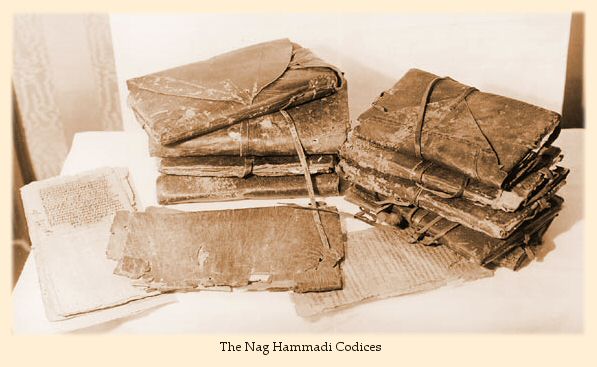
James M. Robinson, The Nag Hammadi Library (San Francisco: Harper Collins, 1990).


My favourite passage in the entire NHC is still Gos Thom 114:

Simon Peter said to them, "Make Mary leave us, for females don't deserve life."
Jesus said, "Look, I will guide her to make her male, so that she too may become a living spirit resembling you males. For every female who makes herself male will enter the kingdom of Heaven."

This still makes me chuckle.

Finally, keep buying books and DVDS.

Christians in Syria


Patrik Hagman of the blog God in a Shrinking Universe has a fascinating post about Christians in Syria.

Christ was born in Palestine, but Christianity was born in Syria.
Bashir al-Assad, President of Syrian Arab Republic


Monday, October 30, 2006

Matthew as a Legalist?

Willi Marxsen advocated that Matthew was a legalistic because in the Sermon on the Mount, Matthew presents Jesus as giving moral imperatives with no indicatives that precede them. Charles Talbert (Reading the Sermon on the Mount, p. 43) contends that there is an indicative in Matthew, that of Jesus' gracious call to his disciples and his presence with them. He writes:

Matthew’s way, moreover, involves him neither in soteriological legalism nor in legalistic covenantal nomism. Like Paul and the Fourth Evangelist, his soteriology is by grace from start to finish. He just uses a different conceptual repertoire. Surely he cannot be faulted for that.

Sunday, October 29, 2006

A Southern Baptist Statement of Cooperation

Towards the end of last week I had some correspondence with Wade Burleson (Pastor at Emmanuel Baptist Church in Oklahoma and a Trustee of the International Missions Board) who has taken a forthright stance on some issues transpiring in the SBC. I shared with Wade some ideas that myself and Joel Willitts have been working on in an essay-manifesto entitled, Solum Evangelium: Renewing Evangelicalism with the Evangel. The essay-manifesto is still in the editing stage and we hope to make it available in the near future, but Wade liked the paper so much that he incorporated elements of it in his post A Southern Baptist Statement of Cooperation. The "Statement" functions as a basis of unity for missionary cooperation in the SBC and is going to be presented to a forum of Baptist leaders. Join with me in prayer that this "Statement" will have a powerful and renewing effect in the SBC.

Saturday, October 28, 2006

Review: Craig A. Evans, Ancient Texts for New Testament Studies

Craig A. Evans
Ancient Texts for New Testament Studies: A Guide to the Background Literature
Peabody, MA: Hendrickson, 2005
$35 USD // £ 20 // $49 AusD
ISBN: 1565634098.

I. Howard Marshall has told a generation of doctoral students at Aberdeen University to "make the primary sources your mistress". However, one would have to be an Academic Solomon to be able to know and master the many mistresses that are out there: the Pseudepigrapha, the Apocrypha, versions of the OT, Dead Sea Scrolls, Josephus, Philo, Papyri, Targumim, Apostlic Fathers, Graeco-Roman literature, and so forth. But one volume that allows students to gain a basic familarity with the primary sources including their translations and scholarly apparatus is this book by Craig A. Evans.

Evans gives an overview of the writings of the Old Testament Apocrypha, the Old Testament Pseudepigrapha, the Dead Sea Scrolls, versions of the OT (Hebrew, Greek, Latin and Syriac), Targums, Philo and Josephus, Rabbinic literature, New Testament Apocrypha and Pseudepigrapha, Early Church Fathers, Gnostic Writings, and other material such as Graeco-Roman authors, inscriptions, and papyri. Each chapter gives an overview of the texts that are dealt with, summaries of the various documents themselves, helpful bibliographies, and examples of their relevance for New Testament study.

On the one hand the book is quite thorough in that it surveys material that often gets overlooked in standard introductions such as the Masada and Murabba documents and Ostraca. On the other hand the sections on the Nag Hammadi library and Graeco-Roman literature were notoriously light. Given the Hellenization of all Judaism in the second-temple period (to some degree or another), one would have expected a lot more on Greek and Latin authors and perhaps even a section on rhetoric and ancient letter writing. However, this is a minor deficiency in an otherwise superb work and the lacuna can be easily overcome by reading David Aune's, Westminster Dictionary of New Testament and Early Christian Literature and Rhetoric (Louisville: Westminster/John Knox, 2003).

One of the problems that I encounter in teaching a NT 101 survey course is trying to convince my students of the value of reading the primary source documents to illuminate the history and context of early Christianity. To this end, Evans gives a good rationale for the value of reading these texts in his introduction. He also dedicates an entire chapter to examples of New Testament exegesis and how an awareness of these primary source documents illuminates our understanding of the New Testament.

Evans is aware of the latest research in most areas (he refers to Nicholas Perrin's study of the Gospel of Thomas and Tatian's Diatessaron) and he is cautious as to how he interprets the evidence (such as the relationship of Jesus and John the Baptist to the Qumran community). There are also some good explanations of certain things such as the differences the between the Amoraic and Tannaic rabbis, messianic interpretation in the Targums, and he frequently identifies the major themes of the various corpra.

The volume also has several very useful appendices including: (1) canons of Scripture that include the Apocrypha; (2) Quotations, allusions, and parallels to the New Testament; (3) Parallels between New Testament Gospels and Pseudepigraphal Gospels; (4) Jesus' parables and the parables of the rabbis; (5) Jesus and Jewish miracle stories; and (6) Messianic claimants of the first and second centuries.

This is an immensely helpful volume for anyone, student or scholar, who is trying to grapple with the vast array of primary source literature and have on hand a reliable summary of their contents and significance. Highly recommended!

The book can be purchased from either Hendrickson publishers in the USA, or for those in the UK/Europe, it is available through Alban Books. The book is also advertized on my Amazon.com sidebar.

Blurb: One of the daunting challenges facing the New Testament interpreter is achieving familiarity with the immense corpus of Greco-Roman, Jewish, and pagan primary source materials. From the Paraphrase of Shem to Pesiqta Rabbati, scholars and students alike must have a fundamental understanding of these documents’ content, provenance, and place in NT interpretation. But achieving even an elementary facility with this literature often requires years of experience or a photographic memory. Evans’s dexterous survey—a thoroughly revised and significantly expanded edition of his Noncanonical Writings and New Testament Interpretation—amasses the requisite details of date, language, text, translation, and general bibliography. Evans also evaluates the materials’ relevance for interpreting the NT. The vast range of literature examined includes the Old Testament apocrypha, the Old Testament pseudepigrapha, the Dead Sea Scrolls, assorted ancient translations of the Old Testament and the Targum paraphrases, Philo and Josephus, Rabbinic texts, the New Testament pseudepigrapha, the early church fathers, various gnostic writings, and more. Six appendixes, including a list of quotations, allusions, and parallels to the NT, and a comparison of Jesus’ parables with those of the rabbis will further save the interpreter precious time.

Wednesday, October 25, 2006

Latest issue of Evangelical Quarterly (2006)


Michael F. Bird
The peril of modernizing Jesus and the crisis of not contemporizing the Christ

Anna M. Robbins
Something in common? The human person as moral agent in individual and corporate expression.

Brian R. Talbot
Fellowship in the Gospel: Scottish Baptists and their relationships with other Christian churches 1900-1945

Monday, October 23, 2006

Diversity in Proto-orthodox Christianity

I'm reading through Bart Ehrman's Lost Christianities, and I'm shaking my head against the view that a cartel of proto-orthodox leaders conspired and then successfully executed a plan to impose doctrinal uniformity upon the pluriform and diverse Christian groups spread over the known world. My objection is that proto-orthodoxy was a little more diverse and tolerant than many realize. Towards an eventual big project on this, this is what I've come up with so far:

"Against those that think that the proto-orthodox imposed unity on the diversity of early Christianity, it is crucial to remember that proto-orthodoxy contained a great deal of diversity itself as is evident from the New Testament. A comparison of the Synoptic, Johannine, and Pauline materials provide ample evidence for this point as the New Testament contains a diverse array of voices. Also Justin Martyr knew of Jewish Christians groups that he considered ‘orthodox’. Tertullian could speak up for the Montanists as those ‘enthusiastic men of the Spirit’. The various hymns and creeds of early Christianity, including those within the New Testament (e.g. Phil. 2.5-11) and through to the Apostle’s creed, were not designed to stifle diversity as much as they functioned to give a basic and broad bare agreement among diverse Christian groups. At Rhossus in the early second-century, the Bishop of Antioch, Serapion, was quite willing at first to allow the church there to use the Gospel of Peter in their private readings alongside more recognized texts, it was only after it was found to be congenial to docetic interpretation that he prohibited the document. But Serapion’s de fault response was to give the document the benefit of the doubt. Serapion never explicitly labels the Gospel of Peter as heretical, but merely states that it was conducive to docetic interpretation. The inclusion of the antilegomena (i.e. the disputed writings) in the canon shows that dispute about what writings were considered authoritative had elasticity and some Christians were willing to accept texts that they were not 100% sure about. In which case, we find both tolerance and boundaries functioning within the matrix of proto-orthodox Christianity. Those boundaries did not occur ex nihilio but were already emerging as part of the struggle of Christians to create and discover their own identity vis-à-vis Judaism and Paganism. Thus the proto-orthodox did not impose uniformity across the board, but they did set limits to diversity. What is more, those limits were not created by a numerically small elite that imposed their iron will upon the unwilling majority, but those boundaries were successful only because they resonated with the pre-existent beliefs, attitudes, and convictions of the majority of Christians across the Mediterranean."

© Michael F. Bird

Saturday, October 21, 2006

Loome Theological Booksellers

Karla and I are visiting some friends up in the Twin Cities (that's Minneapolis-St Paul for our non-Americans) this weekend--North Park had a fall break on Friday so it meant and extended weekend. We have very good friends who live outside Minneaopolis, Joel and Myndi Lawrence(they were DTS and Cambridge contemporaries and Joel now teaches theology at Bethel Seminary). In addition, Paul and Caroline Mathole, dear friends from Cambridge, are visiting the US and we all met up at the Lawrences.

Outside of the Twin cities is a little town called Stillwater. Stillwater sits on the banks of the St. Croix River which forms the border between Wisconsin and Minnesota. It is known for two things: antiques and second-hand books. Believe it or not in this small Minnesota town resides the largest second-hand theological book shop in the world: Loome Theological Booksellers. It possesses approximately 225,000 to 250,000 volumes in ares including biblical exegesis, patrisitic & mediaeval literature, Byzantine & Eastern Orthodox studies, liturgy & worship, sacred music, church art & architecture, religous biography & hagiography, Reformation & Recusancy, and Protestant & Catholic Americana.

It is no exaggeration to say that one could spend a weekend pursuing the shelves of the two buildings full of books. While I was only able to look for a few hours, I did find a handful of things I needed and many more I would have liked to have purchased.

It is worth the effort to visit Stillwater sometime. It could be a lovely weekend away as the little town on the shores of the St. Croix river offer an inviting and relaxing invitation. By the way, there is a cool Starbucks just a block from the bookshop which invites you to sit and enjoy a cup of coffee as you marvel over your discoveries.

Friday, October 20, 2006

Poem about Judas Iscariot

During a game of trivial pursuit I once came across a question which asked, "What colour hair did Judas Iscariot have?" I have read my Bible in and out and back to front and never come across the colour of Judas' hair. With great curiosity I flicked over the card and learnt, to my surprise, that the answer was "red". I spoke with Marvin Meyer in Budapest sometime ago and he confirmed to me the legend that Judas was a red-head. (For those that do not know me, you should know that I am a red-head).

Given the recent Judas frenzy with the publication of the Gospel of Judas and the several ensuing books by Marvin Meyer, Bart Ehrman, Tom Wright and (soon) Simon Gathercole, I thought I would include reference to a poem about Judas that I found in the book by Richard Bauckham and Trevor Hart called At the Cross.

In Hell there grew a Judas Tree
Where Judas hanged and died
Because he could not bear to see
His master crucified
Our Lord descended into Hell
And found his Judas there
For ever haning on the tree
Grown from his own despair
So Jesus cut his Judas down
And took him in his arms
"It was for this I came" he said
"And not to do you harm
My Father gave me twelve good men
And all of them I kept
Though one betrayed and one denied
Some fled and others slept
In three days' time I must return
To make the others glad
But first I had to come to Hell
And share the death you had
My tree will grow in place of yours
Its roots lie here as well
There is no final victory
Without this soul from Hell"
So when we all condemned him
As of every traitor worst
Remember that of all his men
Our Lord forgave him first


D. Ruth Etchells
Beirut, January 20, 1987

I'm not advocating the entire theological package here, but it's a nice poem and fits in snugly with the recent Judas frenzy of media and scholarly attention.

Job Offer: HTC Development Officer

Here at the Highland Theological College we are seeking a Development Officer to add to our staff.

The Development Officer will be responsible for student recruitment and for advertising and marketing our courses. The Development Officer will assist hte Prinicpal with fund-raising and development work, and will take on some general administrative tasks, including maintaining our database. The Development Officer will also be a point of contact for our supporters, including speaking at meetings, visiting churches and so on.
Please send applications to:

Mrs. Fiona Cameron, PA to the Principal of HTC, High St. Dingwall, IV15 9HA, Scotland, UK.
fiona.cameron[at]htc.uhi.ac.uk

Latest issue of New Testament Studies (2006)


The latest issue of New Testament Studies includes the following articles:

Who Comes from the East and the West? Luke 13.28–29/Matt 8.11–12 and the Historical Jesus
MICHAEL F. BIRD

Die Bedeutung der Synoptiker für das johanneische Zeugnisthema. Mit einem Anhang zum Perfekt-Gebrauch im vierten Evangelium.
ROLAND BERGMEIER

Markion vs. Lukas: Plädoyer für die Wiederaufnahme eines alten Falles
MATTHIAS KLINGHARDT

Pagan Philosophers and 1 Thessalonians
JOHN GRANGER COOK

Psychologische Einsichten Quintilians in der Institutio Oratoria
PETER LAMPE

Pontius Pilate and the Imperial Cult in Roman Judaea
JOAN E. TAYLOR

The Reading ‘Who Wished to Enter’ in Coptic Tradition: Matt 23.13, Luke 11.52, and ‘Thomas’ 39
TJITZE BAARDA

Thursday, October 19, 2006

The Death of James Barr

For those that don't know, James Barr, distinguished hebraist and biblical scholar who exposed grave flaws in the traditional approaches to philology and exegesis, passed away recently. You can read the obituary in the Times.

HT: Mark Goodacre

SWBTS and Speaking in Tongues

The Trustees of Southwestern Baptist Theological Seminary of Forthworth, TX have voted to include a doctrinal statement effectively banning any faculty member or trustee from speaking in tongues even as a private prayer language (see BP News). The actual wording is that professors cannot "promote" practices such as speaking in tongues. That might sound ambiguous, but "promote" here has the obvious meaning of "admit to doing it", i.e. no member of SWBTS can admit to having a private prayer language. This is in response to a sermon preached by Dwight McKissic, pastor of Cornerstone Baptist Church in Arlington where he admitted to speaking in tongues and took issue with the IMB for refusing to hire missionaries who did have a private prayer language.

HT: Denny Burk

Before I make an extended tirade on this point let me preface my thoughts with two points:

One: I'm not a Charsimatic, I don't speak in tongues and I'm not sure what to make of all that untie-my-bowtie-who-stole-my-honda stuff. Yet I'm not a cessationist either, so I'm open to what the Spirit will do in the life of other believers.

Two: I'm mad. I'm raging mad that an evangelicalesque institution would turn "private" prayer language, not tongues in public worship, but private prayer language into a make-or-break issue, an issue about what separates the good guys from the bad guys, an issue about who is wearing the white hats and who is wearing the black hats, an issue about who is of the Jedi and who is the Sith, and issue about what defies the bonds of fellowship and partnership.

On second thoughts, I won't go into my tirade, less I write in anger. But Joel Willitts and I are about to publish an essay (or perhaps manifesto might be a better description) called Solum Evangelium which is a call to make one's understanding and expression of the gospel the basis of fellowship and ministry partnership: it commeth! In the mean time if you're in a SBC church and if you're preaching this Sunday (sadly I'm not) this is what I BEG you to do: preach Galatians, the epistle of liberty and life in the Spirit. To those who would shackle and fetter us with the tyranny and bondage of neo-Fundamentalism I say let them hear the word that they fear to hear: Freedom. As Jesus said, "He has sent me to proclaim freedom to the captives"; as Paul says, "It is for freedom that Christ has set us free!" As John says: "if the Son sets you free, you will be free indeed"; Or even as Ernst Kasemann put it, "Jesus means Freedom"! So preach freedom, the freedom of Christ Jesus, the freedom of the Spirit over the letter, the freedom to differentiate between areas of conviction and areas of command. The freedom to major on the majors and to minor on the minors. The freedom to agree to disagree. The freedom to walk hand-in-hand with those whom you don't always see eye-to-eye with on every controversial topic. If you preach freedom in the face of the prayer-police they will accuse you of being a liberal-clauset-charismatic-democrat-voting-pseudo-evangelical-compromiser. In response, preach Galatians some more, preach it until they cover their ears and call down curses on you. Then preach Galatians again and again. And if they preach back at you with a gospel of Jesus + cessationism or Jesus + anything else, then you must out-preach them! Let the gospel of grace and liberty fall from your lips like in did in the days of John Owen, of John Knox and Jonathan Edwards. Make it clear that we stand shoulder-to-shoulder with ALL of our brothers and sisters in Christ no matter what ecstatic utterances they pray in. At the end of the day, if one prays in tongues, he does so unto the Lord. If one does not pray in tongues, he still prays unto the Lord. But tongues or no tongues, we all pray to the same Lord, yours and mine, theirs and ours!

Update: see the post by Wade Burleson on the issue.

Soli Deo Gloria

Recent Travels around Scotland


I've been lucky of late to have had a few invitations to speak at various postgrad seminars around Scotland including New College, Edinburgh University and at St. Mary's College of St. Andrews University. My papers were respectively on "Jesus the Law-Breaker?" (Edinburgh) and "Sectarian Gospels for Sectarian Christians?" (St. Andrews). I had a wonderful time with many enagaging questions and discussions with faculty and students at each presentation. What I love about Scotland is the sense of collegiality between the Universities and, despite coming from a small Theological College part of a University-still-in-the-making, I was treated with great warmth and as a partner in a common enterprise. The many, many, many American Ph.D candidates around the Universities have made it very enjoyable too and I have enjoyed their hospitality and friendship (in fact, I count some of them of my closest friends in Scotland, esp. some of the lads in Aberdeen!). Yes, Scotland is definitely the place to either teach or learn Theology and Biblical studies!

The photos are of St. Andrews Cathedral in St. Andrews and John Knox's statue in New College.

Richard Bauckham's New Book


Last night I was reading some of Richard Bauckham's new book to my daughter - no, not Jesus and the Eyewitnesses (my six year old daughter Alexis is probably not up to that yet, we do work through the GNB though!) - I mean his "other" new book: The MacBears of Bearlock. A children's book written by Richard Bauckham about a bear family who live beside a loch in the north of Scotland. It seems like a good read for children, and it's certainly not as technical as some of his other works. Don't expect to find any encoded allusions to second-temple monotheism or a literary structure for Revelation hidden in the subtext. It is not an allegory in the C.S. Lewis style, but just a fun and adventursome story for children. Good clean fun with a bunch of Scottish bears trying to solve a mystery and keep everyone in the family happy at the same time!


For those interested it can be purchased at Amazon.uk for about £4.99 or about $7.00 (USD) + postage and handling. Your kids will love it! It's a good way to get them exposed to NT scholars at a young age. Who knows, maybe one day when they are grown up they'll be browsing through a book store and see Richard Bauckham's The Gospel for All Christians and will buy it thinking that it is a sequel by the same author to their favourite childhood book! Perhaps not. Anyway, I hope MacBears sells like a Harry Potter novel!

Saturday, October 14, 2006

John Stott on Evangelicalism

Over at Stuff of the Earth Michael Pahl has a good post on Bruce and Stott on Evangelicalism. It includes an interview with Stott from Christianity Today and shows that Stott is in essential agreement with the understanding of Evangelicalism as layed out by Bruce (see the post below).

Friday, October 13, 2006

F.F. Bruce on Evangelicalism

On Evangelicalism, Bruce writes:

"I cannot remember a time when I did not hold this to be the essence of the gospel [Jesus' sacrificial death], but questions which attached themselves to it in earlier days have apparently resolved themselves. It is for this reason that I am always happy to be called an evangelical, although I insist on being an unqualified evangelical. I do not willingly answer, for example, to such designations as 'conservative evangelical'. (Many of my positions are indeed conservative; but I hold them not because they are conservative - still less because I myself am conservative - but because I believe they are the positions to which the evidence leads). To believe in the God who justifies the ungodly is to be evangelical. On many points of New Testament criticism I find myself differing from such post-Bultmannians as Ernst Kasemann and Gunther Bornkamm, but critical differences become insignificant in the light of their firm understanding and eloquent exposition of the Pauline gospel of justification by faith, which is the very heart of evangelical Christiantiy. I deplore the misuse of the noble world 'evangelical' in a party sense. I emphasize this account of what it means to be evangelical because from time to time speakers or writers try to limit the scope of the word by imposing further conditions, as who should say: Unless you subscribe to b, c, and d in addition to a, you cannot be recognized as evangelical. All that this amounts to is that they are imposing their own 'pickwickian' sense on the word." (In Retrospect, pp. 309-10).

Amen, Brucey my Boy!

One thing for Bruce that gets repeated in his book is that faith, evangelical faith, is about "I know whom I have believed in" and not "I know what I have believed in".

Thursday, October 12, 2006

E.P. Sanders and Tendencies of the Synoptic Tradition


A new reprint of Sanders' classic book has just been released and is available at
Amazon.com for those interested.

Coincidentally, today was the day when I again taught the Synoptic Problem to my first year students - this is always an interesting day. The relevance of the topic always comes up as does the question of why God would give us Scripture in this way! And once again, after setting my students to study the Synoptic accounts of the parable of the mustard seed, most of them thought that the Farrer-Goulder-Goodacre theory had the most mileage!

Tuesday, October 10, 2006

F.F. Bruce on ETS

"On another visit to America I participated in the twenty-fifth anniversary conference of the Evangelical Theological Society, held in Wheaton College, Illinois, in the last week of December 1973. For its silver jubilee the Society invited two foreign guests - Dr. Howard Marshall of Aberdeen and myself. Our contributions with published in the proceedings of the conference, New Dimensions in New Testament Study, edited by R.N. Longenecker and M.C. Tenney (1974) ... The Evangelical Theological Society strikes me as being a more conservative body than the Tyndale Fellowship in this country, but there is a maturity of scholarship in the twenty-odd papers in this volume which augurs well for the progress of the society during the next quarter of a century."

F.F. Bruce, In Retrospect, p. 241.

Is this a compliment or a polite jibe at ETS?

C. Kavin Rowe - Early Narrative Christology


Those into Lucan studies should take note of this book by C. Kavin Rowe of Duke University. I've only read the conclusion, but it seems like an informative read.

Early Narrative Christology
The Lord in the Gospel of Luke
Beihefte zur Zeitschrift fur die Neutestamentliche Wissenschaft - BZNW 139
by C. Kavin Rowe


Despite the striking frequency with which the Greek word kyrios, Lord, occurs in Luke's Gospel, this study is the first comprehensive analysis of Luke's use of this word. The analysis follows the use of kyrios in the Gospel from beginning to end in order to trace narratively the complex and deliberate development of Jesus' identity as Lord. Detailed attention to Luke's narrative artistry and his use of Mark demonstrates that Luke has a nuanced and sophisticated christology centered on Jesus' identity as Lord.

Available from Eisenbrauns here.

How effective was the birkat ha-minim

The birkat ha-minim was the curse on Christians added to the eighteen benedictions at Yavneh and was important in the expulsion of Christians from Jewish synagogues, e.g. John 9:22 (so the story goes), but how far ranging and how effective was such a curse:

"If the intent of the blessing was to exclude Christians from the synagogue, it failed. It failed in third-century Caesarea, where Origen preached on Sunday to Christians he knew were in synagogue the day before, and it failed in the late fourth-century Antioch where John Chrysostom condemned his flock for their visits to the synagogues at a time when the empire was already Christian."

Martha Himmelfarb, "The Parting of the Ways Reconsidered: Diversity in Judaism and Jewish Christian Relations in the Roman Empire: 'A Jewish Perspective'," in Interwoven Destines: Jews and Christians Through the Ages, ed. Eugene J. Fisher (New York: Paulist, 1993), p. 49.

Monday, October 09, 2006

Anti-Judaism, Anti-Semitism, and Anti-Zionism: What's the difference?

Paula Fredriksen writes:

Is anti-Judaism, then, the same as anti-Semitism and anti-Zionism? I do not think so. The first is a theological position; the second, a racist one; the third, a political one.

Paul Fredriksen, "The Birth of Christianity and the Origins of Christian Anti-Judaism," in Paula Fredriksen and Adele Reinhartz (eds.), Jesus, Judaism and Christian Anti-Judaism: Reading the New Testament after the Holocaust (Louisville: Westminster/John Knox, 2002), 28.

In this sense I would say that certain documents in the NT (esp. John, Hebrews and Matthew) could be said to be anti-Judaistic (i.e. they reinterpret the Jewish tradition so as to produce a theological break from it) but they are not anti-semitic.

Saturday, October 07, 2006

F.F. Bruce on Faith and Academia

Here's a classic quote from F.F. Bruce:

I am sometimes asked if I am aware of a tension between my academic study of the Bible and my approach to the Bible in personal or church life. I am bound to say that I am aware of no such tension. Throughout my career as a university teacher I have also discharged a teaching ministry in my local church and occasionally in other churches. Naturally, when I discharge a teaching ministry in church I avoid the technicalities of academic discourse and I apply the message of Scripture in a more practical way. But there is no conflict between my critical or exegetical activity in a university context and my Bible exposition in church; the former makes a substantial contribution to the latter. At the same time, membership in a local church, involvement in the activities of a worshipping community, helps the academic theologian to remember what his subject is all about, and keeps his studies properly 'earthed'. One constantly hears complaints nowadays, among Catholics and Protestants alike, of the widening gap between scholars' understanding of Scripture and the use made of it by 'ordinary' Christians. The gap would not be so wide, I am sure, if more scholars were to involve themselves in the day-to-day life of a local church and communicate the fruits of their scholarship to their fellow church members in a form which the latter could assimilate. I have known some distinguished scholars who did this, to their own enrichment as well as the enrichment of the others.


F.F. Bruce, In Retrospect, pp. 143-44.

Friday, October 06, 2006

Data Sheet on Messianic Expectation

Glen Miller of Christian Think Tank has a good hand out on Jewish messianic expectation in the second-temple period. I haven't checked all of his references, but it looks kosher.

Also, does anyone know of a reference from Philo where crowds in Alexandria mock the hope of a Jewish ruler who was to come and reign over the world? I thought it was in Embassy to Gaius, but I can't find it.

Thursday, October 05, 2006

F.F. Bruce's Biography

I am currently reading through the biography of F.F. Bruce In retrospect: Remembrance of things past. It's a cracking read. In a footnote, Bruce writes about one anonymous chap: "This good man in later years described me as an 'ecclesiastical liberal'; I suspect he meant it as a criticism, but I welcomed it as a compliment" (p. 27). Even Brucie got called a liberal! Maybe some of us aren't in such bad company afterall.

See here and here for a review of the book.

The New Testament in Christian Hymns

Ever wondered what verses in the NT appear in what Christian hymns? Then check out the list at Cyber Hymnal. For instance, you can find the great Christian hymns that contain quotes from or allusions to Galatians or Hebrews or Daniel. When you click on a song it gives you the lyrics and plays the music as well!

Hebrews and Catholicity

What Hebrews may lack in apostolicity it makes up for in catholicity. Consider the following quote from Jerome:

The Epistle which is inscribed to the Hebrews is received not only by the Churches of the East, but also by all Church writers of the Greek language before our days, as of Paul the apostle, though many think it is from Barnabas or Clement. And it makes no difference whose it is, since it is from a churchman, and is celebrated in the daily readings of the Churches. (Epist. 129)

Wednesday, October 04, 2006

New Books from T&T Clark

The following books stood out in the Dove Booksellers list:

Westfall, Cynthia Long
Discourse Analysis of the Letter to the Hebrews: The Relationship between Form and Meaning
(T & T Clark International, 2006)

Tonstad, Sigve K
Saving God's Reputation: The Theological Function of Pistis Iesou in the Cosmic Narratives of Revelation
(T & T Clark International, 2006)

Taylor, Mark E
Text-Linguistic Investigation Into the Discourse Structure of James
(T & T Clark International, 2006)

Slee, Michelle
Church in Antioch in the First Century, CE: Communion and Conflict
(T & T Clark International, 2006)

Monday, October 02, 2006

Robert Gundry reviews Bart Ehrman

Over at Evangelical Textual Criticism I have posted a link to Robert Gundry's review of Ehrman.